Skip to content
Contact Us
Antibody Drug Conjugates

Inside the ADC Revolution

Twenty-five years after the first ADC approval, technology continues to evolve. Explore the breakthroughs, lessons learned and emerging trends turning promise into progress.   

Meet the experts

Meet the people behind the progress

Precision experts are fluent in the A to Z of ADCs, from development to delivery and access to impact. 

Nicholas Richardson, DO, MPH Image
Precision for Medicine Nicholas Richardson, DO, MPH
Harpreet Singh, MD Image
Precision for Medicine Harpreet Singh, MD
Greg Gregory, PhD Image
Precision AQ Greg Gregory, PhD
Cherry Moldovan, PhD Image
Precision AQ Cherry Moldovan, PhD
Ross Maclean, MD Image
Precision AQ Ross Maclean, MD
Hannah Deresiewicz Image
Precision AQ Hannah Deresiewicz
Ivan Barrera, MD Image
Precision for Medicine Ivan Barrera, MD
Beyond the breakthrough

Bridging the gap between promise and patients.

Some ADCs redefine standard of care. Others stall despite early promise. The difference often lies beyond the molecule, in the interpretation of evidence, strategic development and market access. 

ADC-topic-page-card-1
Promise Developing next-gen ADCs

Innovation might spark excitement. But successful ADCs rely on carefully planned development strategies tied to trial design, dose optimization, and regulatory engagement. The right decisions early on can drive longer-term success.  

ADC-topic-page-card-2
Progress Turning data into decisions

As ADCs evolve, so do expectations. HEOR, real-world data and value communication strategies can help demonstrate the impact of innovation to decision-makers across the biopharma ecosystem. 

ADC-topic-page-card-3
Patients Bringing progress to people

The journey doesn’t end at approval. Market access planning, stakeholder engagement and commercialization strategies can all have a hand in ensuring ADCs reach the people who need them most. 

Keep exploring

Where ADCs go from here

Get the latest perspectives on ADC development, from emerging scientific and clinical trends to evidence generation and market access.  

 
Questions answered

ADC FAQs

Explore answers to some of the most common questions surrounding antibody-drug conjugates, from development and regulation to evidence generation and market access. 

What are antibody-drug conjugates?

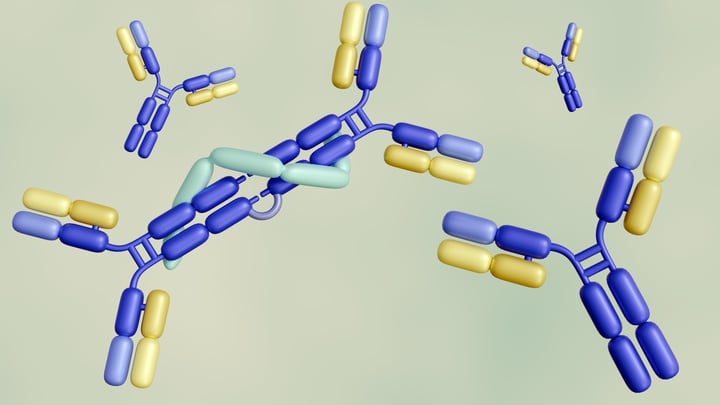
Antibody-drug conjugates (ADCs) are targeted cancer therapies that combine a monoclonal antibody, a cytotoxic payload and a chemical linker. Together, these components are designed to deliver treatment directly to tumour cells while limiting off-target effects. 

Why are ADCs considered one of oncology’s most promising treatment approaches?

ADCs combine the precision of targeted therapy with the potency of traditional cancer treatments. By directing highly active payloads to specific tumor cells, they offer the potential to improve efficacy while managing toxicity. Recent clinical successes have accelerated investment, expanded development pipelines and increased interest in moving ADCs into earlier lines of therapy. 

How do ADCs move from later-line treatment to front-line therapy?

Moving into earlier lines of therapy requires strong evidence demonstrating improved outcomes compared with existing standards of care. Developers must consider trial design, patient selection, dosing strategies and safety profiles while generating data that satisfies regulators, payers and clinicians. 

What are the biggest challenges facing ADC developers?

Scientific innovation is only one part of the equation. ADC developers must navigate complex manufacturing requirements, optimize dosing strategies, manage safety considerations and generate evidence that supports both regulatory approval and market access. 

Why is dose optimization so important in ADC development?

Dose optimization helps balance efficacy and safety. The objective is not simply to identify the highest tolerated dose, but the dose most likely to deliver meaningful clinical benefit while maintaining an acceptable safety profile.

How does the FDA evaluate new ADC therapies?

The FDA evaluates ADCs using many of the same principles applied to other oncology therapies, including safety, efficacy and overall benefit-risk assessment. The complexity of ADCs also requires consideration of linker stability, payload characteristics, manufacturing consistency and dose selection. 

What role does HEOR play in ADC value demonstration?

Health economics and outcomes research helps translate clinical results into evidence that resonates with payers, providers and healthcare systems. Robust HEOR strategies can strengthen reimbursement discussions and support long-term adoption following approval. 

Why is real-world evidence important for ADCs?

Real-world evidence can help demonstrate how ADCs perform across broader patient populations, support value communication and address questions that emerge after approval. It is becoming an increasingly important component of lifecycle strategy.